

Continuing our series on understanding and addressing the growing dissatisfaction in today’s workforce. I’m peeling back another layer of the complex challenges that businesses and employees face. Today, let’s talk about the hidden struggle of unmet expectations subtly weakening the fabric of modern workplaces.
Ramesh, a project manager at a reputed tech company is a classic case study. Initially, he was ecstatic about landing a job with one of his dream companies. He’d start his day with great enthusiasm, ever ready to take on new challenges. But lately, his enthusiasm has waned, replaced by a nagging feeling of dissatisfaction.
You’d think it’s the story of every employee, but let’s understand what’s really going wrong and where:
Here’s what Ramesh’s life looks like from the societal lens:

Yet, Ramesh feels increasingly disconnected.
Why, despite “having it all,” does such a gap exist between his expectations and reality?
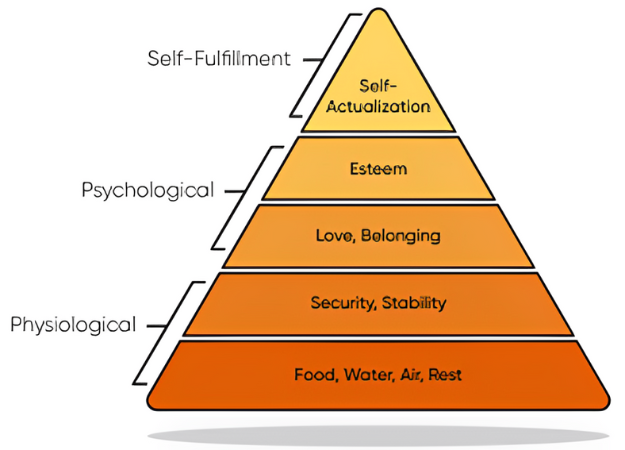
Now, let’s trace his journey through the timeless Maslow’s hierarchy of needs:
While Ramesh’s basic physiological needs meet the criteria, the higher levels clearly reveal significant gaps.
Most companies are sailing with outdated maps. In the complex ecosystem of today’s workplace, organizations often navigate by the stars of measurable metrics.
And most of them often fail to fully grasp the metrics that truly influence their bottom lines.
Why?
Peter Drucker famously stated,
“You can’t manage what you can’t measure”
– a principle that has anchored many business strategies.
Yet, an obsession with quantifiable metrics alone can sometimes steer a company off course, echoing W. Edwards Deming’s warning:
“It is wrong to suppose that if you can’t measure it, you can’t manage it – a costly myth.”
Traditional metrics focused on measurable outcomes, fail to capture the nuanced aspects of employee experience.
Ramesh’s challenges at work—his sense of insecurity, lack of belonging, underappreciation, and stifled creativity—are not easily quantified. Yet, they’re real problems affecting employee morale and engagement.
Organizations must realize they cannot quantify every metric that hurts business bottom lines; they need to look beyond the numbers at the very core of human needs and desires.
While the Maslow framework gives us an insight into what employees need, recent global shifts have made the fulfillment of these needs more complex and tumultuous:
Each of these factors has contributed to a state of flux within the workforce, challenging organizations to adapt swiftly and thoughtfully.
Any wonder then that Gallup studies reveal a staggering 85% of employees are not engaged at work? While economists are still debating on whether or not the “Great Resignation” has finally ended, we cannot be sure if “The Big Stay” signifies that companies are finally getting the EX (Employee Experiences) right or if economic instability is a silent contributor.
As we reflect on these insights, the critical question is: how well has the workforce adjusted to these tumultuous shifts?
The repercussions of unmet expectations stretch far and wide, subtly undermining both personal well-being and organizational health.
The repercussions are a stark reminder of the importance of aligning workplace realities with employee needs.
I’ve come to see that real change requires a deep, empathetic understanding of these unmet expectations. We need to look beyond the numbers and listen to the stories and experiences of our employees.
Dissecting these layered challenges, it’s clear that traditional management metrics and practices are insufficient for addressing the evolving needs of the workforce. The disconnect between what is expected and the new workplace reality calls for a dynamic response from both organizations and their employees.
Despite the prevalent belief in metrics, we must acknowledge that not every crucial aspect of business and employee management is quantifiable. The essence of effective management in today’s dynamic environment lies in recognizing and nurturing the less tangible elements of workplace culture and employee engagement.
As we continue this series, our next entry will examine the specific catalysts that have led us to this critical juncture. We’ll explore the hangover from machine-oriented workplaces that continue to hold people back. Together, we’ll uncover forward-thinking strategies to realign employee expectations with modern workspaces and shape the future of organizations.
Stay tuned as we continue to unravel workplace evolution, seeking solutions that not only address the symptoms but also get to the heart of creating a satisfied and productive workforce.
Join the conversation. Let’s rethink our approach and strive for a workplace where everyone can proudly say, “I am happy and fulfilled.”
Let’s continue to bridge the gap between expectation and reality.
Author – Sriram Sadras
The Intrinsicana human performance system provides a dynamic and practical solution designed to evolve with you, seamlessly adapting to your unique organizational challenges.